Poznań (POZ-nah-nye) doesn’t get the same attention as Kraków or Warsaw, and honestly. It’s one of the oldest cities in Poland, with a huge student population, and food traditions you won’t find anywhere else in the country. I grew up here, and I still find new corners to explore.
If you’re looking for things to do in Poznań, this guide covers everything from the big-ticket sights to the spots where locals actually spend their weekends. I’ve included prices, practical tips, and the truth about what’s worth your time. Let’s get into it.
Table of Contents
Walk the Old Market Square (Stary Rynek)
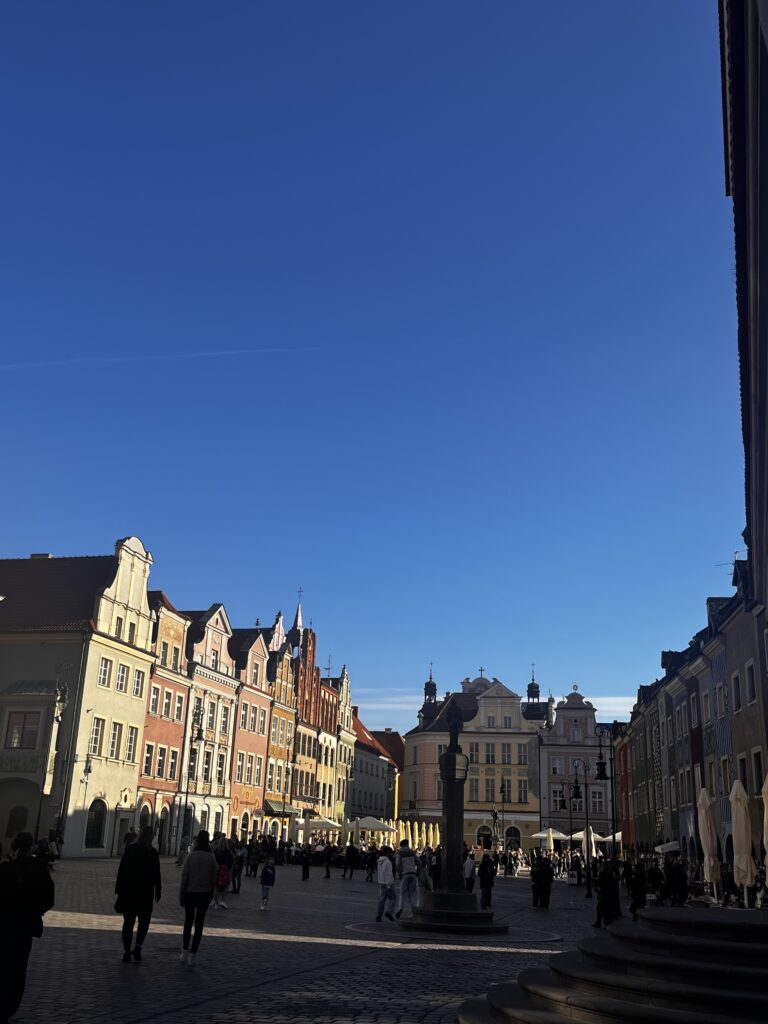
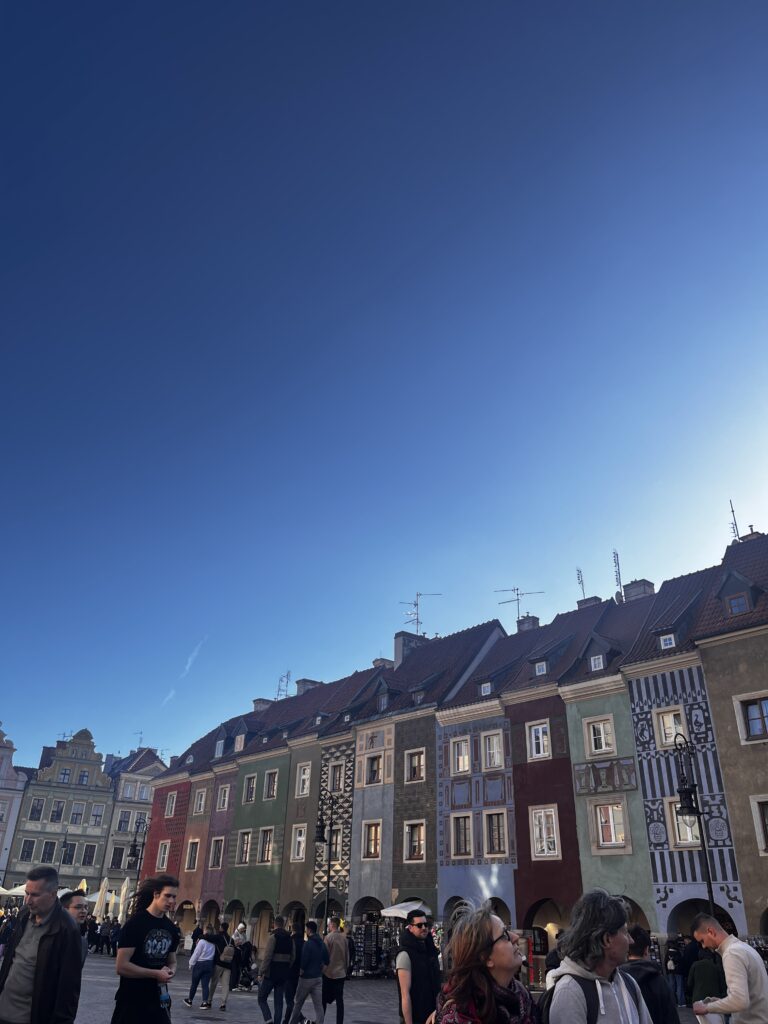
The Stary Rynek is the obvious starting point, and for good reason. It’s one of the largest and oldest market squares in Poland, dating back to the 13th century, and the colourful merchant houses that line it look like a more compact version of what you’d find in Wrocław or Gdańsk.
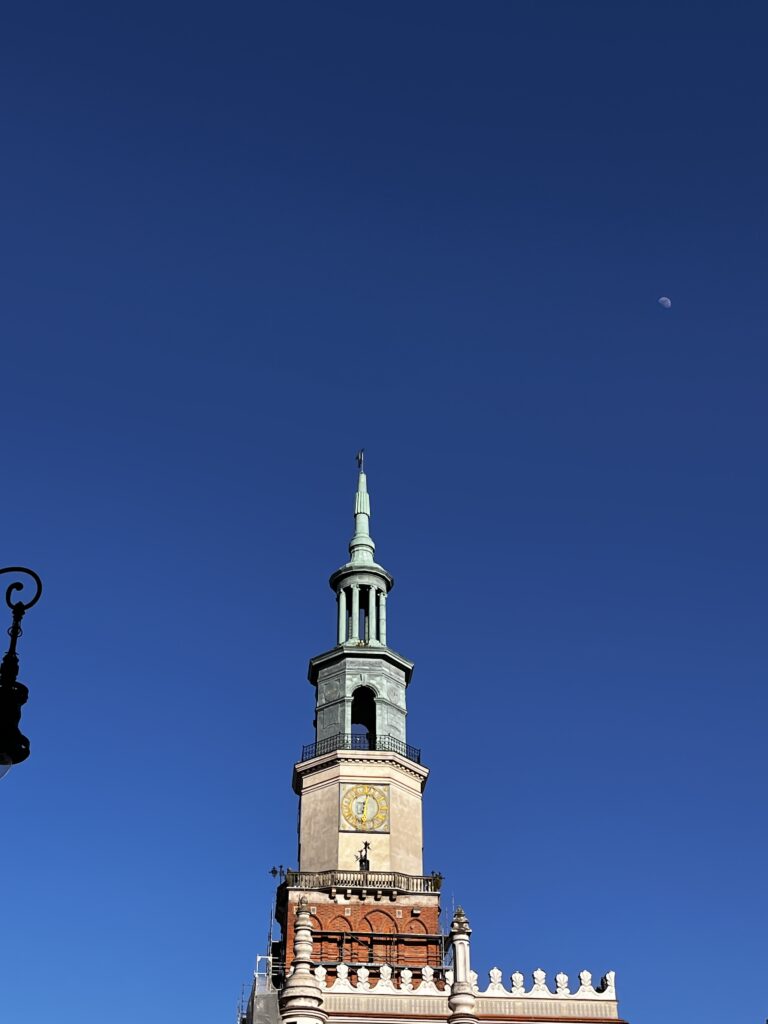
The Renaissance Town Hall sits in the centre and it’s genuinely impressive up close. Don’t just walk past it. Go inside if you can — the Great Hall on the first floor has a coffered ceiling from the 1500s that’s worth seeing. Entry is about 7 PLN (~$2 / €2 / £1.50).
The square is ringed with restaurants, and I’ll be direct: most of the ones with outdoor seating on the square itself are tourist-priced. They’re fine for a coffee, but for a proper meal, walk one or two streets in any direction and you’ll find places that are half the price and twice as good.
Watch the mechanical goats at noon
Every day at 12:00 PM, two mechanical goats emerge from the clock tower on the Town Hall and butt heads twelve times. It takes about two minutes. Crowds gather around 11:50, so show up a bit early if you want a decent view.
Is it a must-see? It’s a 500-year-old tradition, and it’s free. It lasts two minutes. You’re going to be on the square anyway, so just time your visit around noon. The legend behind it involves a cook, a deer, and two goats that escaped onto the Town Hall roof — the kind of story that only makes sense if you don’t think about it too hard.
Eat pyry z gzikiem (and other local food you won’t find elsewhere)
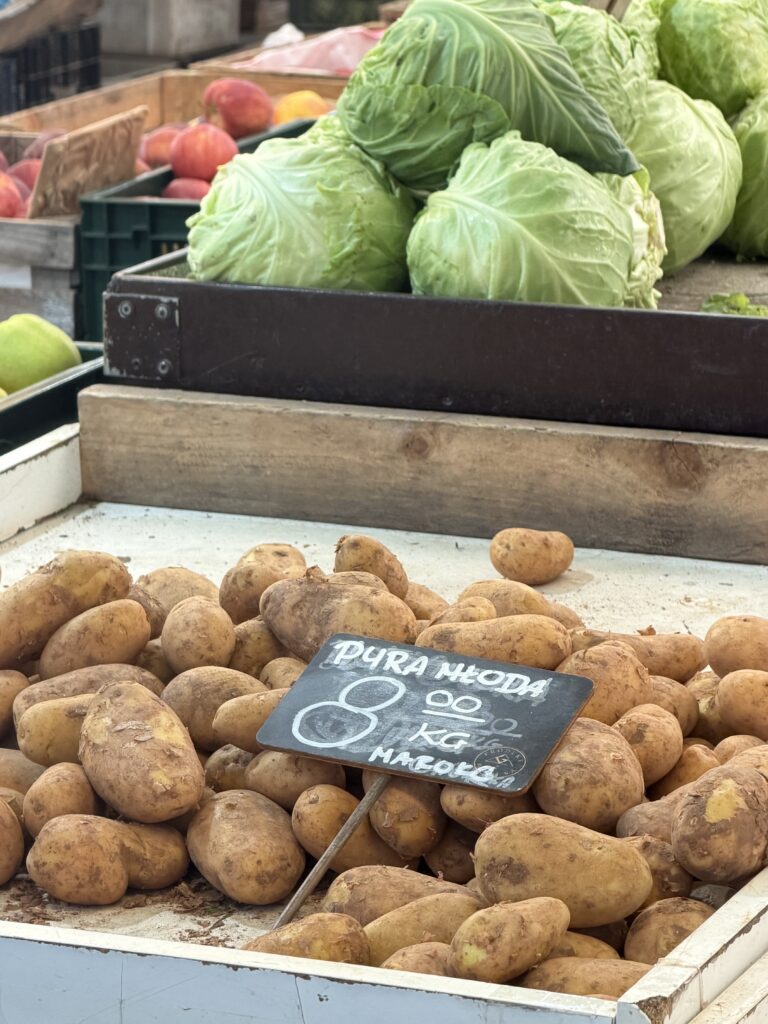
Poznań has its own food culture that’s distinct from the rest of Poland. It is surpring for people from other parts of the country. The dish you absolutely need to try is pyry z gzikiem (PEH-rih z GZHEE-kee-em) — boiled potatoes served with a creamy quark cheese mixed with chives. It sounds simple because it is. It’s also completely addictive. A more sophisticated version would be with local linseed oil.
Explore Cathedral Island (Ostrów Tumski)
Ostrów Tumski (OS-troof TOOM-skee) is where Poland essentially started. This island on the Warta River is the site of the oldest cathedral in Poland — the Poznań Cathedral of Saints Peter and Paul, first built in the 10th century. Poland’s earliest rulers, Mieszko I and Bolesław Chrobry, are buried here.
The cathedral has been destroyed and rebuilt multiple times, most recently after World War II. The Gothic brick exterior you see today hides a crypt with fragments of the original pre-Romanesque church, which is genuinely old in a way that’s hard to wrap your head around. Entry to the cathedral is free; the crypt and Golden Chapel cost 10 PLN (~$2.50 / €2.50 / £2).
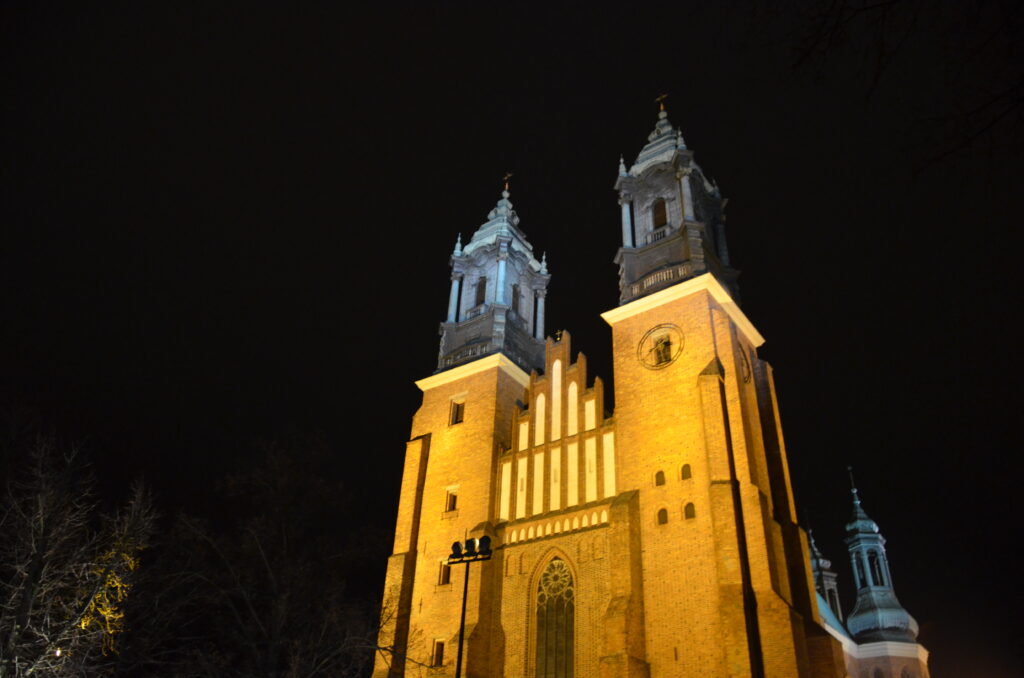
The cathedral is also atmospheric in the evening, highly recommend a walk then.
The island itself is quieter than the Old Town. There’s a footbridge connecting it to the Śródka district (more on that later), and the walk along the river in the evening is one of the nicest things you can do in Poznań for free.
Warm up in the Palm House (Palmiarnia Poznańska)
The Palmiarnia (pal-MYAR-nyah) is one of the largest palm houses in Europe, and it’s a genuinely great visit, especially if the weather isn’t cooperating (which, in Poznań, is at least half the year). It’s located in Wilson Park, a short tram ride from the centre.
Inside you’ll find around 17,000 plants across different climate zones — from tropical rainforest to arid desert. There’s also an aquarium section with fish tanks and a small display of exotic animals. Kids tend to love it, but I’d say it’s just as enjoyable for adults who want to escape the rain for an hour.
Practical info: Tickets are 18 PLN (~$4.50 / €4 / £3.50) for adults, 12 PLN for students. It’s open Tuesday through Sunday. Getting there: take tram 2, 9, or 16 to the Park Wilsona stop.
Learn about codebreaking at the Enigma Museum
This is one of the most interesting things to see in Poznań and most visitors don’t know about it. Three mathematicians from Poznań University — Marian Rejewski, Jerzy Różycki, and Henryk Zygalski — cracked the Enigma code years before the British effort at Bletchley Park. The Poznań Enigma Cipher Centre tells that story.
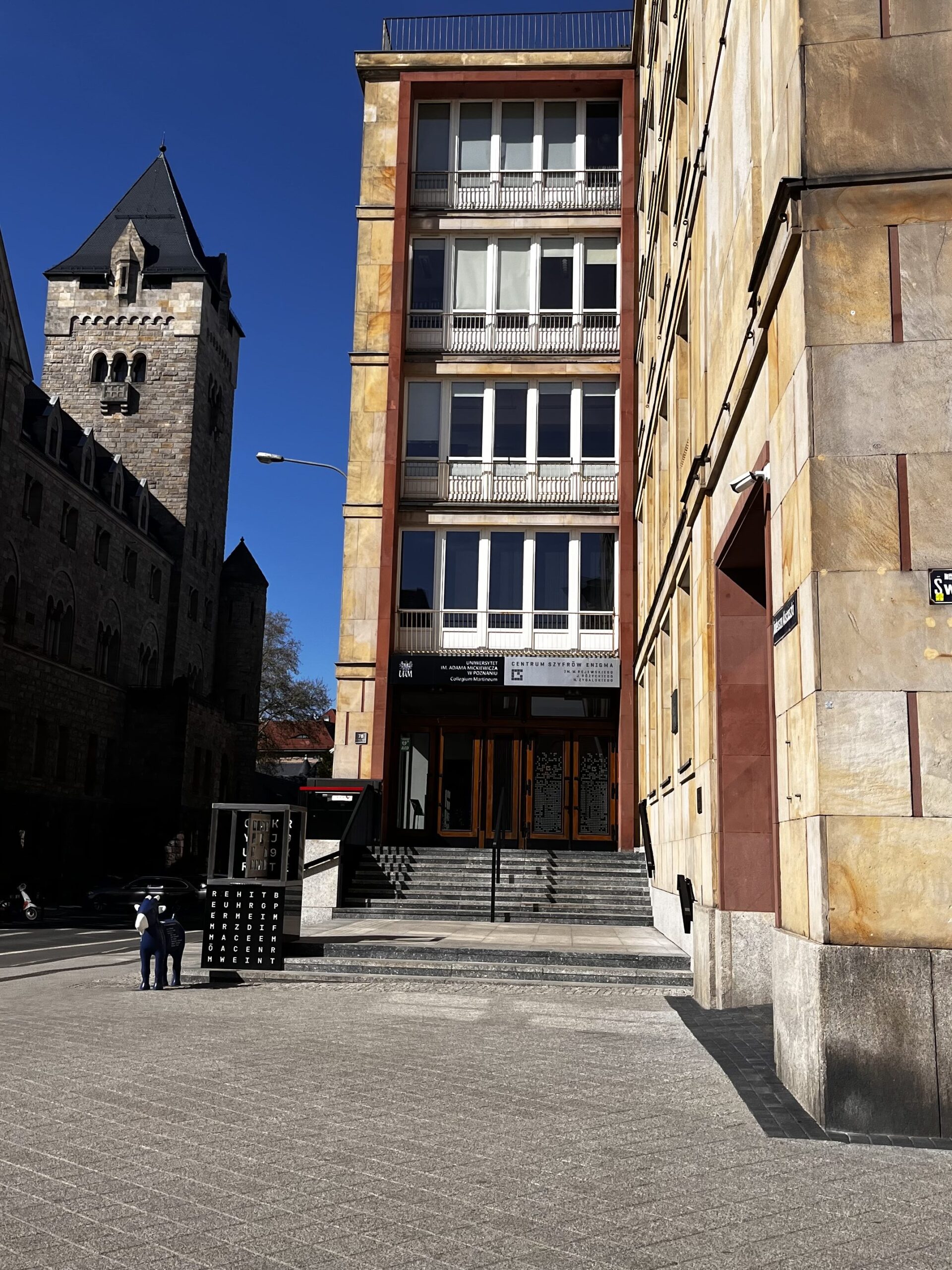
The museum is interactive and surprisingly modern. You can try your hand at code-breaking exercises and see replicas of the machines used. It’s located in the Imperial Castle courtyard. Tickets are about 17 PLN (~$4 / €4 / £3.50) for adults.
Why it matters: The Polish contribution to cracking Enigma is one of the most underappreciated stories of World War II. If that era of history interests you at all, don’t skip this one.
Browse Stary Browar
Stary Browar (STAH-rih BROH-var) is a former brewery that’s been converted into a shopping centre and art gallery. I know, „shopping centre” doesn’t exactly scream cultural experience, but this one’s different. It won the prestigious World Retail Award in 2005 and the architecture genuinely integrates the old brewery structure with modern glass and steel.
You’ll find a mix of international and Polish brands, plus rotating art installations throughout the building. It’s a good rainy-day option and there are several decent restaurants on the ground floor.
Spend an afternoon at Malta Lake
Jezioro Maltańskie (Malta Lake) is an artificial lake about 3 km east of the Old Town, and it’s where locals go on weekends. There’s a paved path running around the lake that’s popular with joggers and cyclists, and in summer you can rent kayaks and pedal boats.
Around the lake you’ll find the Poznań Zoo (New Zoo), Malta Ski (an artificial ski slope that runs year-round as a toboggan track in summer), and a miniature railway that kids enjoy. It’s not a quick in-and-out sight — budget at least 2–3 hours if you want to walk the loop and stop for something.
Getting there: tram line 1, 4, or 16 to Rondo Śródka, then a 10-minute walk. Or just walk it from the Old Town in about 25 minutes.
Walk through Citadel Park (Park Cytadela)
This huge park north of the Old Town sits on the grounds of a former Prussian fortress. It’s one of the biggest urban parks in Poland and it’s a proper escape from the city noise. There are two military museums inside the park (the Poznań Army Museum and the Museum of Armaments), old bunkers you can poke around, and a collection of socialist-realist sculptures that feels like a museum of a different kind.
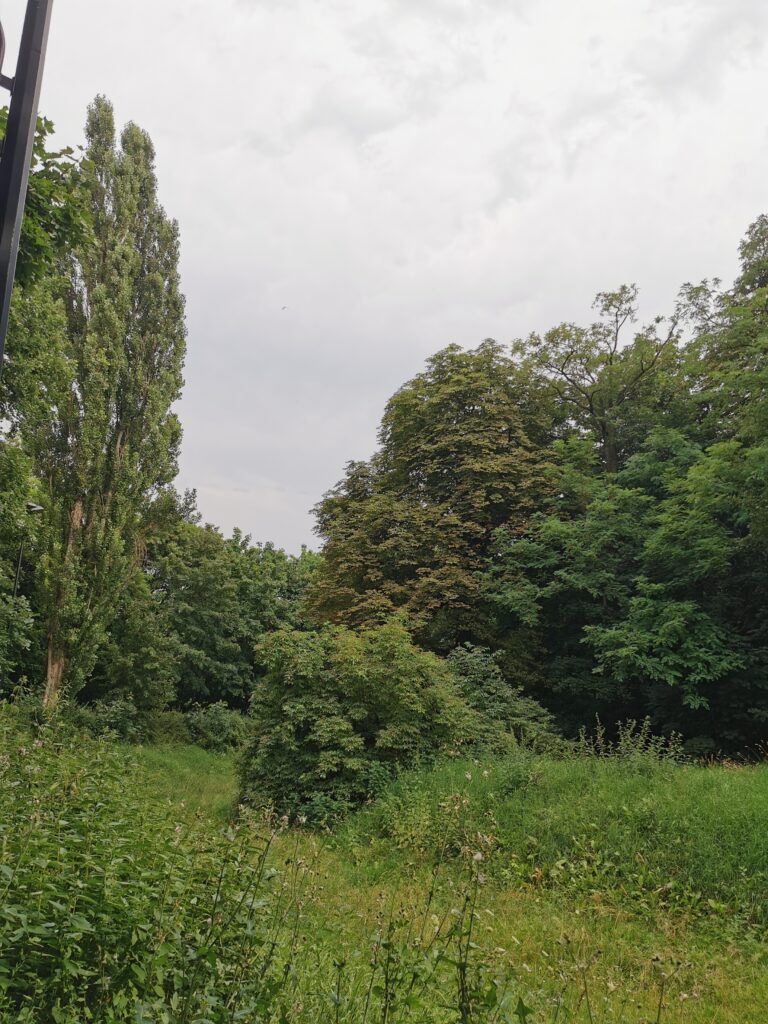
I’d recommend it mainly as a place to walk. The paths are shaded, there are several playgrounds for kids, and you can easily burn an hour or two without trying. Free entry to the park; museum tickets are around 8–10 PLN (~$2–2.50 / €2–2.50 / £1.50–2).
Cross the river to Śródka
Śródka (SHROOD-kah) is a small district just across the river from Cathedral Island, connected by a pedestrian bridge. For years it was pretty run-down, but it’s gone through a revival in the last decade. The main thing people come to see is a large 3D mural covering one of the buildings — a painting by Radek Kozakiewicz that plays with perspective and gives the illusion of a lively neighbourhood scene.
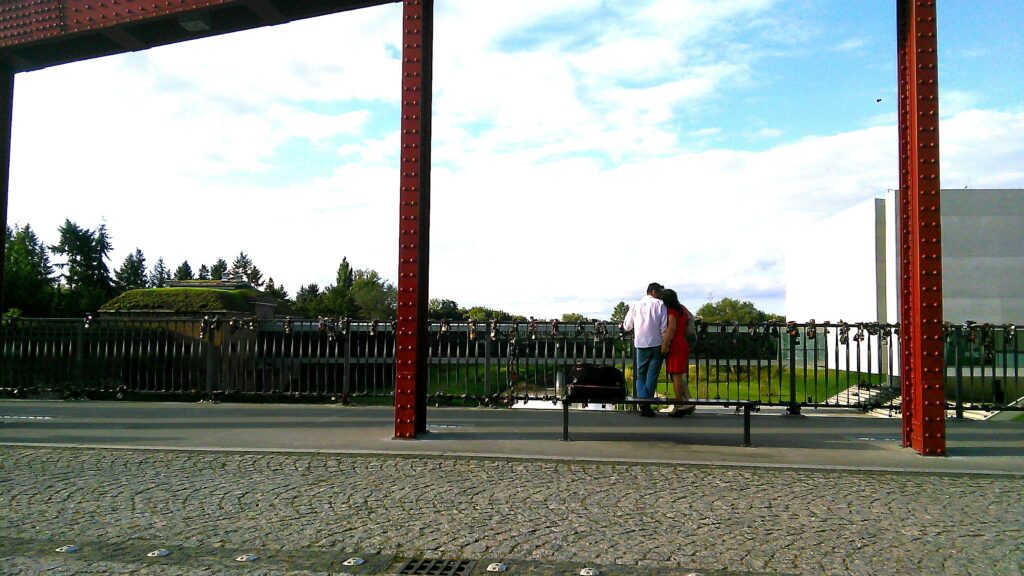
Beyond the mural, there are a handful of good restaurants and cafes in the area. It’s small — you can see everything in 20 minutes — but it’s a nice add-on to a visit to Ostrów Tumski since you’re right there anyway.
Try a St. Martin’s croissant (rogal świętomarciński)
The rogal świętomarciński (ROH-gal shvee-en-toh-mar-CHEEN-skee) is Poznań’s most famous pastry, and it’s unlike any croissant you’ve had before. It’s a crescent-shaped pastry made with a semi-puff dough, filled with white poppy seeds, almonds, raisins, and candied orange peel, then glazed with icing. A proper one weighs at least 150 grams.
This is a protected regional product — there’s actually an official recipe, and only certified bakeries in Wielkopolska can call their version a rogal świętomarciński. A single croissant costs around 8–15 PLN (~$2–4 / €2–3.50 / £1.50–3), depending on where you buy it.
The traditional day to eat them is November 11th (St. Martin’s Day), when Poznań goes through hundreds of thousands of croissants in a single day. But you can buy them year-round at most bakeries in the city centre.
Visit the Croissant Museum (Rogalowe Muzeum Poznania)
If you want the full story behind the rogal, the Croissant Museum on the Old Market Square runs interactive shows where you learn the history and then actually make your own. It’s cheesy in the best way, the guides are theatrical and it’s clearly geared toward tourists, but it’s fun.
Shows run several times a day and last about 45 minutes. Tickets are 25 PLN (~$6 / €6 / £5) for adults. Book in advance during the summer because they do sell out, especially the English-language sessions. You leave with a croissant, so there’s that.
Explore Jeżyce and Łazarz for the local atmosphere
If you want to see what Poznań is like outside the tourist zone, head to Jeżyce (YEH-zhih-tseh) or Łazarz (ŁAH-zash). These are residential neighbourhoods just west of the city centre that have become the epicentre of Poznań’s best cafés and bar scene.
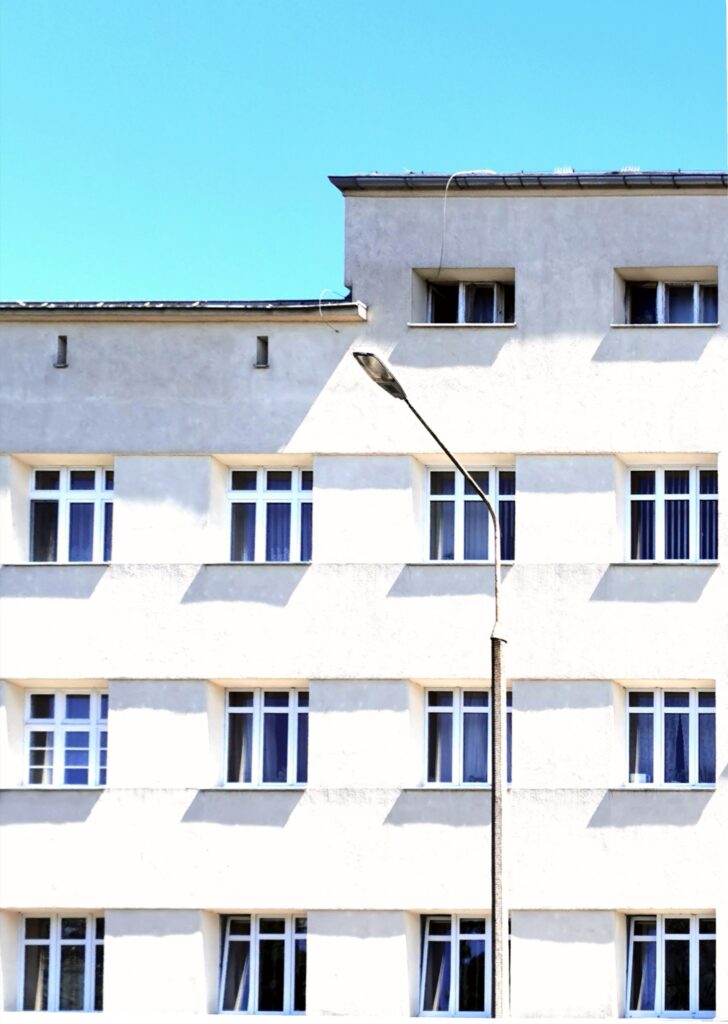
Definitely recommend those neighbourhoods for an architectural walk – secession tenements, and modernist architecture with a break for a lovely coffee.
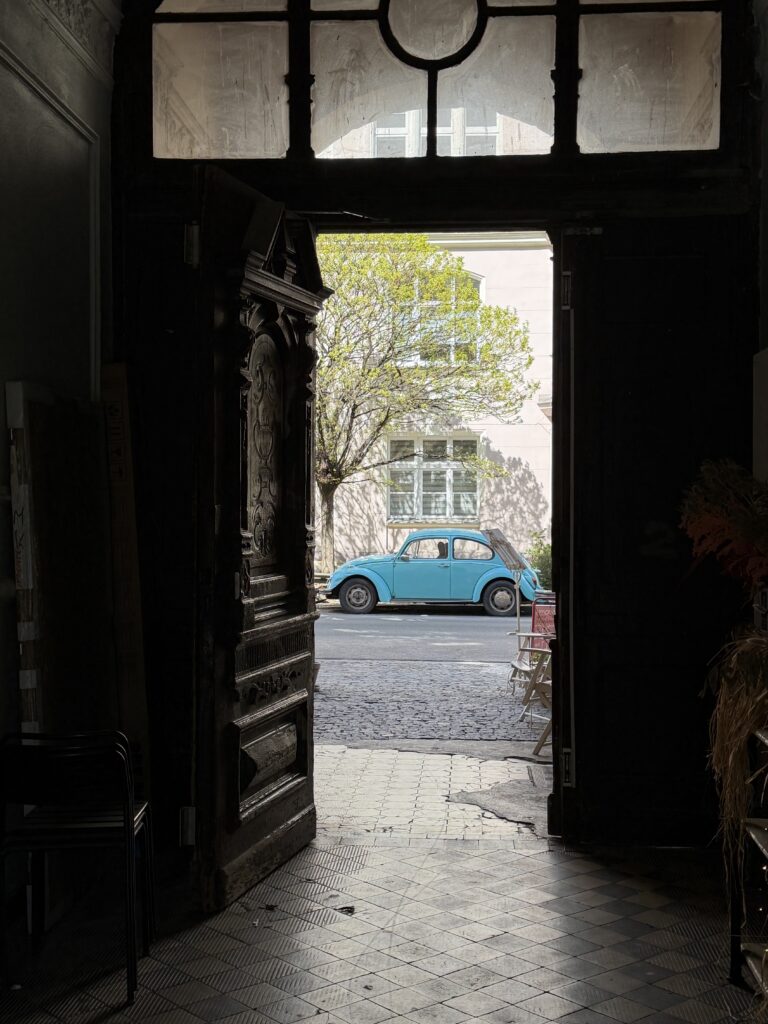
Jeżyce has a daily market (Rynek Jeżycki) where you can buy local produce, flowers, and street food. The streets around it are packed with independent coffee shops, craft beer bars, and small restaurants. Łazarz is similar in spirit but a bit quieter, with some excellent bakeries and wine bars. Neither neighbourhood is a „sight” in the traditional sense, but they’re the reason Poznań feels like a real city and not a museum.
Find the street art
Poznań has a quietly good street art scene, concentrated mainly in Śródka, Jeżyce, and around the university area. There’s no official trail, which is kind of the point. Some spots also have Polish poetry with accompanying mural of their authors. The Śródka 3D mural gets the attention, but there are murals, paste-ups, and small installations scattered across these neighbourhoods if you keep your eyes open.
I’d suggest just walking and seeing what you come across. If you want a more structured approach, the local tourist office sometimes runs guided street art walks during the summer.
Practical info: quick reference
| Detail | Info |
|---|---|
| Getting there | Poznań Ławica Airport (POZ) has direct flights from London, Dublin, and several European hubs. From Warsaw, it’s 2.5 hours by PKP Intercity train (~60–100 PLN / $15–25). |
| Getting around | The tram and bus network covers the whole city. A single ticket costs 4.60 PLN (~$1.15). Bolt and Uber both operate here. |
| Language | English is widely spoken in the centre, especially by anyone under 35. You’ll have no trouble at hotels, restaurants, and attractions. Less so in outer neighbourhoods. |
| Currency | Polish złoty (PLN). Cards are accepted almost everywhere, including market stalls. ATMs (bankomat) are easy to find. |
| Best time to visit | May through September for warm weather. November 11th for St. Martin’s Day (croissant day!). December for the Christmas market on the square. |
| Sundays | Most shops in Poland are closed on Sundays (with a few exceptions per year). Restaurants, museums, and Żabka (24/7 convenience stores) stay open. |
| Tipping | 10% at restaurants is standard, not obligatory. Round up for taxis. No need to tip at bars. |
| Tap water | Safe to drink in Poznań. |
| Time needed | 1.5–2 full days to see the main sights. 3 days if you want to explore the neighbourhoods at a relaxed pace. |
FAQ
Yes. Poznań is one of the most underrated cities in Poland. It has a beautiful Old Town, a unique food scene (pyry z gzikiem, St. Martin’s croissants), several excellent museums, and an amazing vibe during vacation months. Good to add if you are visiting Warsaw, and looking for a day trip.
Poznań is famous for its colourful Old Market Square, the daily mechanical goat show at the Town Hall, and St. Martin’s croissants. It’s also historically significant as one of the oldest cities in Poland and the site where Polish cryptographers first broke the Enigma code.
English proficiency in Poznań is high by European standards, especially in the city centre and among younger people. Over 60% of residents in the urban area can communicate in English. You’ll have no issues at restaurants, hotels, museums, or with ride-sharing drivers. In outer neighbourhoods and with older residents, having a few Polish phrases will help.