
Poland has its own way of doing things, and most of it is easy to pick up once someone tells you what to expect. The dos and don’ts in Poland aren’t a long list of traps — they’re mostly common sense wrapped in a culture that values directness, respects history, and takes hospitality seriously.
The short version:
| Do | Don’t |
|---|---|
| Validate your public transport ticket before you travel | Jaywalk — traffic police do issue fines |
| Pay in złoty, not euros | Drink alcohol in public spaces — it’s illegal and fines are enforced |
| Tip around 10% in sit-down restaurants | Call Poland „Eastern Europe” |
| Take your shoes off when you enter someone’s home | Be careless around WWII history — for many Poles it’s family memory, not abstract |
English works fine in most cities, especially with anyone under 40, so language isn’t the barrier people expect it to be.
This article covers the practical rules first — transport, money, safety — then moves into the social and cultural side, including how Polish hospitality actually works, what topics to handle carefully, and a few specific scams and legal quirks that catch first-time visitors off guard.
Table of Contents
Do’s in Poland: what to do as a visitor
Poland rewards visitors who show up with a little preparation. The country has its own rhythms — social customs, food culture, unwritten rules — that aren’t hard to navigate once you know what to expect. Cities like Kraków (KRAH-koof), Warsaw and Gdańsk (guh-DANSK) are well set up for English-speaking tourists, but step outside the main squares and things get more local, fast. A bit of groundwork before you land makes the difference between feeling like a tourist and feeling like you actually know where you are.
One thing worth knowing before you arrive: Poland is in the Schengen Area, so US and UK citizens don’t need a visa for stays up to 90 days. That’s one less thing to stress about.
Learn these basic Polish phrases before you arrive
Polish people genuinely appreciate it when visitors make even a small effort with the language — a dzień dobry (DYEN doh-brih, „good day”) when you walk into a shop goes further than you’d think.
A few others worth knowing: dziękuję (jen-KOO-yeh, „thank you”), proszę (PROH-sheh, „please” or „here you go”), przepraszam (psheh-PRAH-shahm, „excuse me/sorry”), and na zdrowie (nah ZDRO-vyeh, „cheers”).
Older Poles and people outside major cities often speak little to no English, so these phrases are genuinely useful rather than just polite. In formal situations, address people as Pan (sir) or Pani (ma’am) rather than jumping straight to first names — it’s the standard respectful form and Poles use it constantly.
Polish food you should try (and where to find it cheap)
The obvious starting point is pierogi (pyeh-ROH-gee) — dumplings stuffed with potato and cheese, meat, mushroom and sauerkraut, or sweet fillings like blueberry.
Beyond that, try żurek (ZHU-rek), a sour rye soup often served in a bread bowl, bigos (BEE-gos), a slow-cooked hunter’s stew of cabbage and meat, placki ziemniaczane (potato pancakes), and zapiekanka — an open-faced baguette with mushrooms and cheese that’s the definitive Polish street food. For all of these at rock-bottom prices, find a bar mleczny (bar MLECH-nih), literally a „milk bar.”
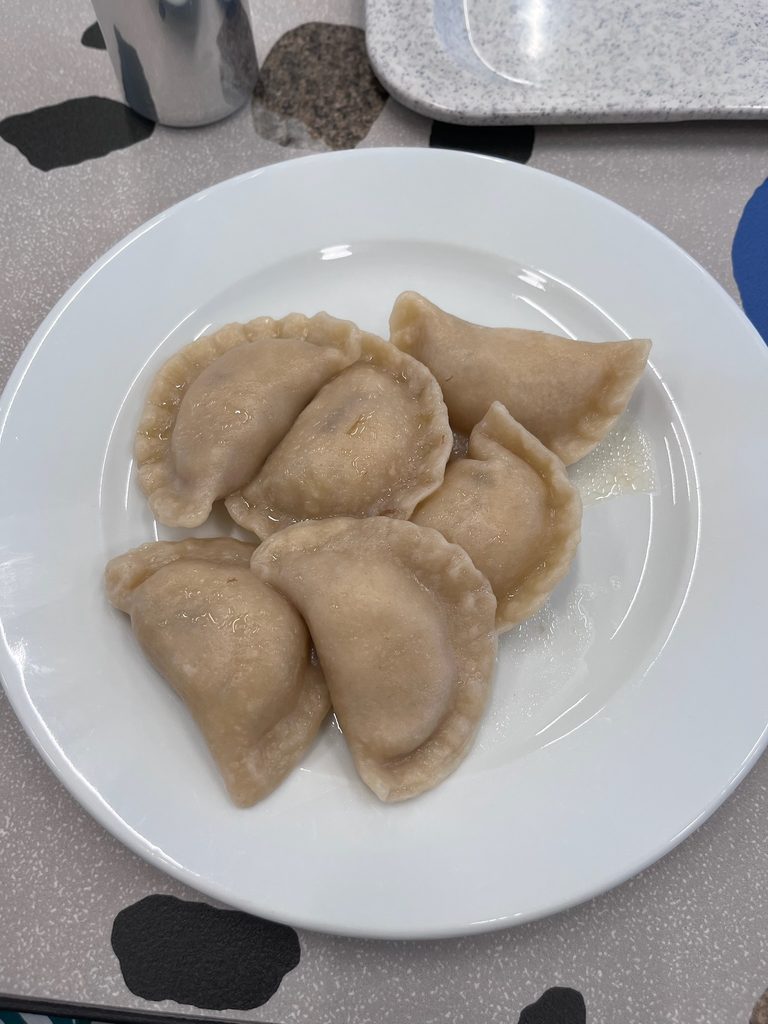
They might not always look like, but they will be your new favourite food. Trust us.
These are subsidised canteen-style restaurants left over from the communist era, and a full hot meal typically costs somewhere around 20–30 PLN (~$5–7 / €5–7 / £4–6). They’re no-frills, cash-friendly, and the food is exactly what Polish home cooking tastes like.
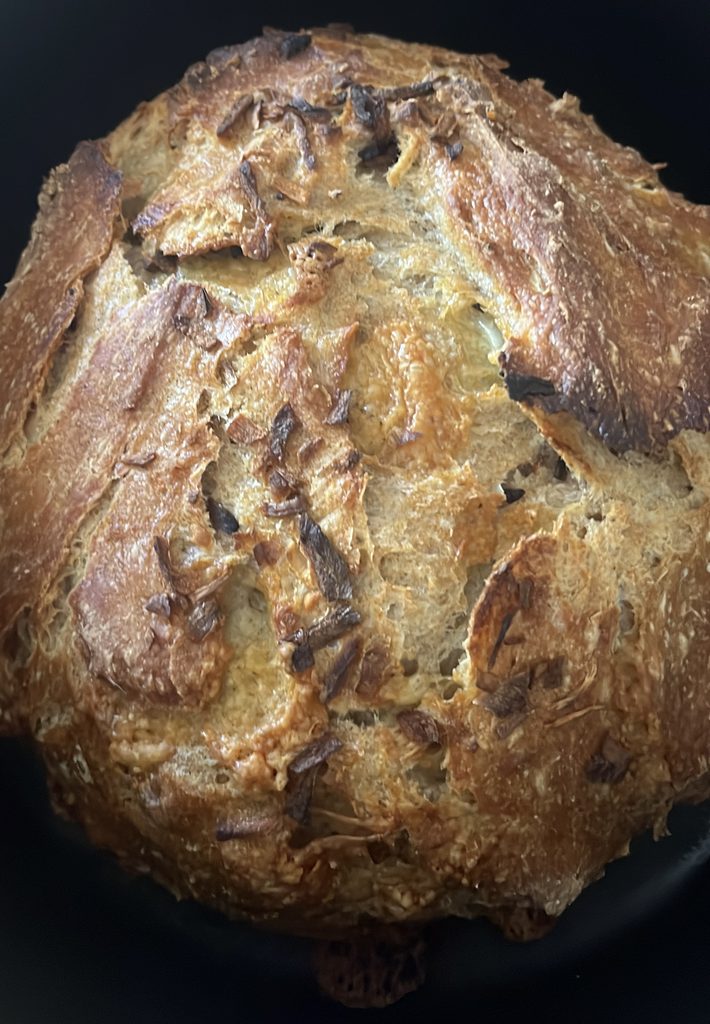
Make sure you will try our sourdough bread! You can get it in the bakeries,as well as the restaurants.
Getting around Poland: transport rules every visitor should know
Poland’s transport network is genuinely good, and getting between cities is straightforward once you know how it works. Intercity trains are fast, comfortable and cheap by Western European standards. Buses — FlixBus especially — fill the gaps where rail is slower or less convenient.
In Warsaw, Kraków, Wrocław and Gdańsk, Bolt and Uber work exactly as you’d expect.
The three things that catch visitors out are:
public transport ticket validation,
train booking windows,
and a couple of driving rules that Polish police enforce without much sympathy.
How to buy and validate public transport tickets
Buy your ticket before you board — at a machine on the platform or at the stop, through the city’s official app, or at a Żabka convenience store. You can also use Jakdojade.pl (which also has applications, for both the Android and Apple fans)
One ticket typically covers buses, trams and metro within the same city zone. The critical part: paper tickets must be stamped in the validation machine the moment you board. Plain-clothes inspectors carry official ID and issue fines on the spot — around 266 PLN (~$65 / €60 / £52) in Warsaw, though the exact amount varies by city. Paying on the app sidesteps the validation issue entirely, which is why I’d recommend it for anyone who doesn’t want to think about it.
Train travel in Poland: tickets, booking and conductors
Book intercity (IC) and express (EC) trains at intercity.pl or at the station counter — prices go up as seats fill, so booking a week or two ahead gets you the best fares. Around Easter, All Saints’ Day (1 November) and Christmas, trains sell out fast; a month ahead is not excessive for those periods. If you board without a ticket, find the conductor immediately and tell them — you’ll pay a small surcharge rather than the full penalty fare you’d get if they find you first. FlixBus is worth considering for routes where the train is slow or infrequent; it’s not as comfortable, but the prices are hard to argue with.
Driving rules you must follow in Poland
Headlights on at all times, day and night, year-round — this is the law, not a suggestion, and police do stop people for it. Every passenger in the car must be belted, including those in the back seats. The drink-drive limit is extremely low (more on that in the don’ts section), so the practical rule is: if you’re driving, you’re not drinking. Motorways are generally in good shape; rural roads can be a different story, so build in extra time if you’re heading off the main routes.
Polish culture and social etiquette
One thing that catches a lot of first-time visitors off guard: Poles can seem cold when you first arrive, and then remarkably warm once you’re actually in their home. That’s not a contradiction — it’s just how Polish social culture works. Public life is quiet and private. Personal life is generous and genuinely hospitable. Understanding that difference early will save you from misreading a lot of situations.
Poland sits in Central Europe, not Eastern Europe — a distinction that matters to Poles, who have spent decades pushing back against Cold War-era geography that grouped them with the Soviet bloc. If the topic comes up, it’s worth knowing.
Punctuality and social norms in Poland
Show up on time. Don’t be like Julia. This applies to casual plans, not just formal meetings — if you’ve agreed to meet someone at 14:00, being ten minutes late without a message is considered rude. On public transport, keep your voice down. Poles don’t typically strike up conversations with strangers on trams or buses, and loud phone calls draw quiet disapproval. Waiters won’t hover, so you’ll need to make eye contact or raise a hand to get service — don’t take the lack of attention as poor service. None of this is unfriendliness; it’s just how public space works here.
Dress code for churches and religious sites in Poland
Poland is still a predominantly Catholic country, and most churches are active places of worship — not museums with altarpieces. Cover your shoulders and knees before entering, and keep your voice low. Photography during Mass or other services is not appropriate, and some churches restrict it altogether. A lightweight scarf in your bag solves the coverage problem in seconds, so there’s no real excuse to be turned away at the door.
Visiting someone’s home: Polish hospitality customs
Take your shoes off at the door — don’t wait to be asked, just do it. When your host offers food or drink, accept it. Declining is often taken personally, even if you’re genuinely full. If you’ve been invited for dinner, bring something: a non-alcoholic wine, chocolates, or flowers all work well. Keep in mind that more and more poles are drinking less, or even no alcohol at all. So bringing them wódka can be risky.
History and sensitive topics: what not to say
This section matters more than most. Poland’s 20th century was lived experience, not a chapter in a history book, and for many Poles it’s still family memory. Two world wars, Nazi occupation, the Holocaust, Soviet-era communism: these aren’t abstract talking points here. Getting your language wrong will cause genuine offence, and it’s worth knowing why before you arrive.
One more thing worth clearing up before we get into specifics: Poland is Central Europe, not Eastern Europe. Geographically, culturally, and historically, Poles make a clear distinction and they’ll notice if you don’t.
What not to say about WWII, the Holocaust and Auschwitz
The single most important rule: never call Auschwitz a „Polish camp.” It was a German Nazi concentration and extermination camp, built and operated on Polish soil during the German occupation of Poland. Poles were among the first prisoners there. Calling it Polish implies Polish responsibility, and that’s a deeply painful misrepresentation that Poles take seriously. Say „German Nazi camp in occupied Poland” if you need to be specific.
Don’t confuse the Warsaw Ghetto Uprising of 1943 with the Warsaw Uprising of 1944. They were separate events, involving different groups, with different causes and outcomes. Mixing them up signals to any Pole you’re talking to that you haven’t done the basic reading.
Skip the WWII jokes and the communist-era humour unless you know someone well enough to read the room. What seems like dark comedy to an outsider can land very differently when someone’s grandparents lived through it.
At Auschwitz-Birkenau itself, photography is permitted in most outdoor areas, but not inside the barracks or exhibition rooms. Follow the signs, keep your phone down when it’s not appropriate, and take your cues from the people around you.
Booking Auschwitz-Birkenau: why you must plan ahead
If visiting Auschwitz-Birkenau is on your list, book well in advance, particularly between May and September when timed entry slots fill up weeks ahead. Entry to the site is free, but guided tours cost money; prices vary depending on the tour length and language, so check the official booking system at auschwitz.org for current rates and availability. Individual unguided visits are only available outside peak hours, so if you’re coming in summer, a guided tour is effectively your only realistic option.
The site is roughly 80 km from Kraków, the most common base for a visit. You can get there by train to Oświęcim or by organised bus transfer from Kraków, with several operators running daily departures from the city centre. Budget around two to three hours minimum for the visit itself; most people find they need longer. Check our Visit Kraków to learn more
Don’ts in Poland: what to avoid at all costs
Most of what follows isn’t complicated. Poland isn’t a country full of bureaucratic traps waiting to catch tourists out — but there are a handful of rules that carry real consequences if you ignore them, and a few scams that specifically target people who look like they’ve just arrived. None of this should put you off. Knowing these things in advance means you won’t spend an afternoon dealing with a police fine, or hand over twice the going rate to a taxi driver who spotted you wheeling a suitcase out of Kraków Główny.
The other category is cultural. Some things won’t get you fined but will make you look like you didn’t bother to think before you arrived. That matters here. Poles are warm and generous hosts, but they notice when visitors treat the country carelessly — particularly around its history. The sections below cover both kinds: legal lines you shouldn’t cross and social ones worth respecting.
Alcohol and smoking laws in Poland
No, you can’t drink a beer on a park bench in Poland — at least not legally. Public alcohol consumption is banned in streets, squares and parks unless you’re in a licensed area like a bar terrace or a designated beer garden. The fine for drinking in public isn’t astronomical, but it’s real and police do enforce it in tourist-heavy areas, particularly in summer. The rule for alcohol sales is also firm: it’s illegal to sell or give alcohol to anyone under 18, and shops will ask for ID. For smoking, follow the signs — designated smoking areas exist for a reason, and smoking where it’s prohibited indoors or in certain public spaces will get you asked to leave at minimum.
Drink-driving laws: Poland’s strict legal limits
Poland’s drink-driving limit is 0.2‰ BAC — that’s stricter than the UK (0.8‰) and lower than most US states. If you’re caught between 0.2‰ and 0.5‰, you’re looking at a fine and points on your licence. Go above 0.5‰ and it becomes a criminal offence: possible arrest, up to two years in prison, and confiscation of the vehicle. The practical takeaway is simple — if you’re driving in Poland, don’t drink at all. One beer puts some people over the limit here.
Sunday shopping: what to expect with restricted trading hours
Most shops in Poland are closed on Sundays. This isn’t a quiet suggestion — it’s a legal trading restriction that applies to supermarkets, shopping centres and most retail chains. There are a small number of trading Sundays scattered through the year (typically before major holidays), but you shouldn’t count on them when planning your trip. The exemptions that matter for travellers: Żabka convenience stores, petrol stations, some pharmacies and shops at train stations and airports stay open. The practical fix is straightforward — do your big supermarket shop on Saturday, and keep in mind that this applies wherever you are in Poland, not just in smaller towns.
Photography rules at memorial sites and with strangers
At Auschwitz-Birkenau, photography is permitted in most outdoor areas but there are specific restrictions inside certain buildings — follow the instructions from your guide and the signs on site. Don’t photograph strangers on the street without asking first; it’s considered rude and in some contexts can technically raise legal questions around image rights. Many churches and some museums also restrict or ban photography entirely — look for signs at the entrance rather than assuming it’s fine. When in doubt, ask.
Taxis and ride-hailing: how to avoid scams in Poland
Don’t take a taxi from someone who approaches you outside a station or airport — those are almost always unlicensed drivers charging whatever they think they can get away with. Use Bolt or Uber instead; both work reliably in Warsaw, Kraków, Gdańsk, Wrocław and most other cities, and the price is fixed before you get in. If you want a traditional taxi, call a radio taxi company or book through their app — a legitimate cab will have a meter, visible company branding and will give you a receipt. The airport and main train station in Warsaw are the spots where this scam is most common, but Kraków’s main station has the same problem.
Money, tipping and shopping in Poland
Poland uses the złoty (PLN) — not the euro, and that surprises more visitors than you’d expect. Even in border towns or tourist-heavy areas, most shops, restaurants and transport won’t accept euros, so don’t assume you can get by without local currency. The good news is that Poland is significantly cheaper than Western Europe, and your money goes a long way here.
Cash, cards and ATMs: how to handle money in Poland
Poland does not use the euro. The currency is the Polish złoty (PLN), and while contactless payments and Apple/Google Pay are widely accepted in city restaurants, cafés and shops, you’ll still want some cash on hand. Market stalls, rural guesthouses and public toilets (which typically charge 1–2 PLN, roughly $0.25–$0.50 / €0.25–€0.50 / £0.20–£0.40) often won’t take cards at all. When you do use an ATM, go for machines inside bank branches — standalone street ATMs carry a higher skimming risk, and some aggressively push dynamic currency conversion, which is a bad deal. Decline any offer to be charged in your home currency and stick to PLN.
Tipping etiquette in Polish restaurants and taxis
Tipping in Poland is appreciated but not mandatory — 10–15% in restaurants is the norm if the service was good, but check your bill first, as some places add a service charge automatically. In taxis, rounding up to the nearest round number is standard. There’s one local custom worth knowing: when you hand over cash and say „dziękuję” (jen-KOO-yeh — „thank you”) before the server or driver has given you change, that’s taken as a signal to keep it. So if you want your change back, wait for it before you say anything.
Safety, legal rules and border essentials
Poland is a safe country to travel around. Violent crime targeting tourists is rare, and most visitors complete entire trips without any incident beyond the odd pickpocket in a crowded market. That said, a few legal rules are strict enough that ignorance won’t help you — particularly around drink-driving, ATM use, and what you can and can’t carry across the border.
Emergency numbers and ATM safety in Poland
The number to know is 112 — it works from any phone, including without a SIM card, and connects you to emergency services with English-speaking operators available. If you’d rather reach Polish services directly:
| Number | Service |
|---|---|
| 112 | All emergencies (English available, works without a SIM) |
| 997 | Police (policja) |
| 998 | Fire brigade (straż pożarna) |
| 999 | Ambulance (pogotowie) |
For ATMs, use machines inside bank branches rather than standalone units on the street — card skimming does happen on the tourist-heavy streets of Kraków and Warsaw’s Old Town. One thing you don’t need to worry about: tap water. It’s safe to drink in all major Polish cities, so you can skip the bottled water.
Winter in Poland: how to prepare for the cold
Don’t underestimate November through March. January temperatures regularly drop to -15°C (5°F), and a light jacket that works fine in London or New York will not cut it in Warsaw in February. Pack thermal layers, a proper coat, waterproof boots, and gloves — cobblestones get icy and are unforgiving. The upside is that winter has genuine appeal: December brings excellent Christmas markets in Kraków, Wrocław, and Warsaw, and the Tatra mountains offer solid skiing from January through March.
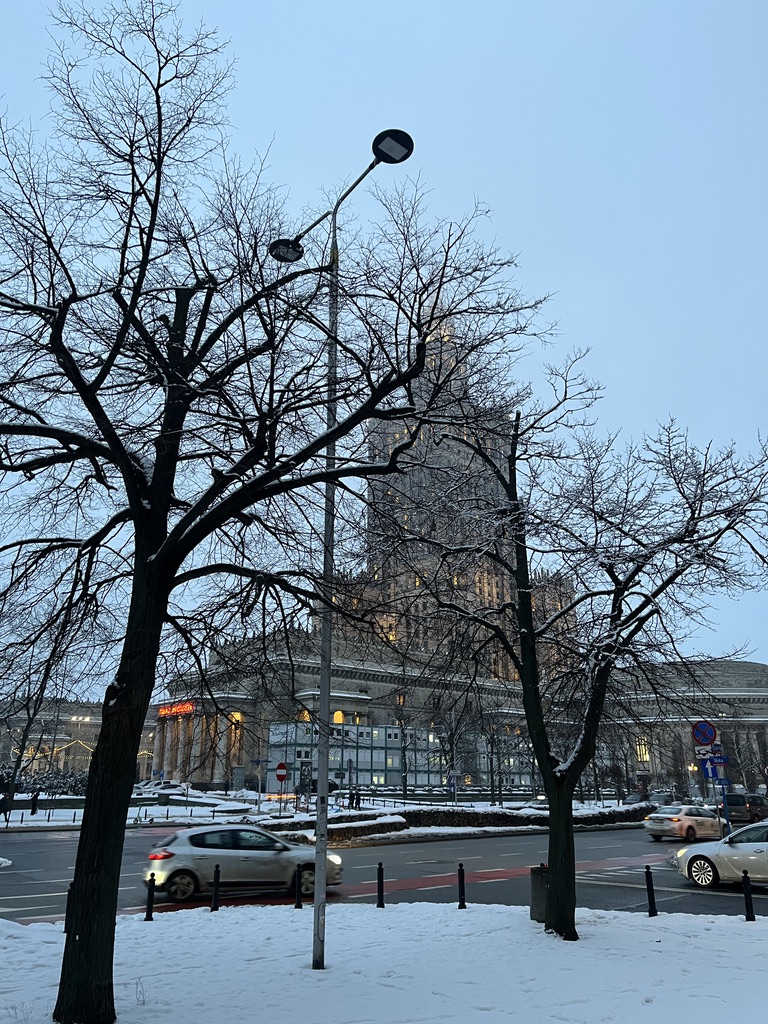
Yes. It can be snowy. Though it usually isn’t. Though the winter of 2025 was rough.
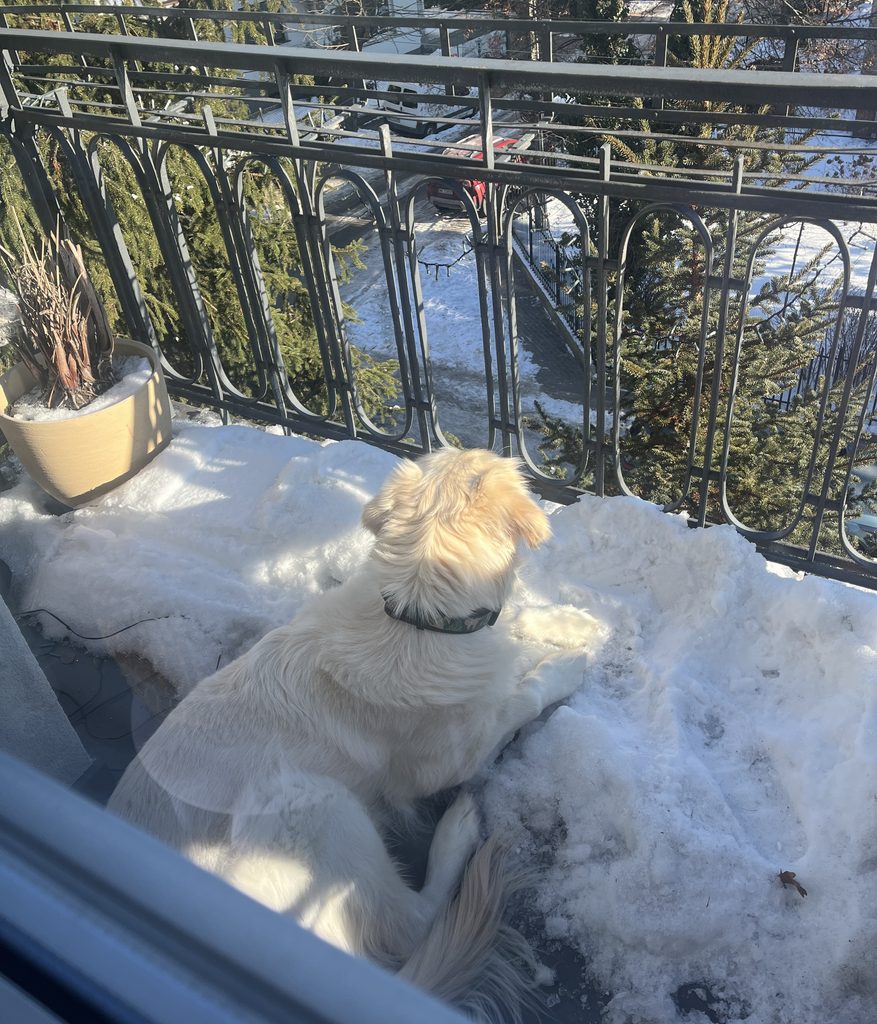
I mean, you can always be like Baks and don’t be bother.
Customs, visas and what you cannot bring into or take out of Poland
Both US and UK citizens can enter Poland visa-free for up to 90 days within any 180-day period — this is the Schengen rule, and it applies to UK visitors post-Brexit too. Don’t overstay it; the consequences follow you across all Schengen countries, not just Poland. On the customs side: no drugs, no offensive weapons, no counterfeit goods, and no meat or dairy products brought in from outside the EU. Flying in, duty-free limits are 1 litre of spirits and 200 cigarettes.
If you’re planning to take home antiques or anything that could be classified as a historic artefact, you’ll need an export permit — Polish customs take this seriously.
FAQ
Q: Is there a dress code in Poland? A: For everyday sightseeing, wear whatever you like. If you’re visiting a church or religious site, cover your shoulders and knees — most places will turn you away or hand you a shawl if you don’t. It’s a basic sign of respect and takes about ten seconds of planning.
Q: Can you drink alcohol in public in Poland? A: Drinking in public spaces like streets, parks, and squares is generally illegal and can result in a fine. Designated areas — some beer gardens, festival zones, and licensed outdoor terraces — are the exception. If you’re unsure, stick to a café or bar terrace rather than cracking open a beer on a bench.
Q: Is tipping expected in Poland? A: Around 10% is standard in sit-down restaurants if you’re happy with the service, but it’s not obligatory the way it is in the US. To make sure your tip reaches the server, hand the cash directly to them rather than leaving it on the table. In taxis and cafés, rounding up the bill is a common and appreciated gesture.
Q: Does Poland use the Euro? A: No — Poland’s currency is the złoty (PLN), and there are no current plans to switch to the Euro. You’ll need PLN for almost everything, though some hotels and tourist-facing businesses near the border may accept Euros at a poor exchange rate. Withdraw złoty from a local ATM for the best deal.
Q: Is Poland considered Eastern Europe? A: Geographically, yes, though many Poles prefer the term „Central Europe” — and it’s not an unreasonable case given Poland’s position on the map. It’s a mildly sensitive point, so Central Europe is the safer choice in conversation. Either way, it won’t make or break your trip.
Q: Are there photography restrictions in Poland? A: At Auschwitz-Birkenau and other memorial sites, photography is permitted in most areas but treated as a serious matter — no selfies, no posing. Some museum interiors ban flash or photography entirely, so check the signs. As a general rule anywhere, ask before photographing individuals, particularly older people.
Q: Is it safe to visit Poland? A: Poland is one of the safer countries in Europe for tourists. Petty theft in crowded areas and tourist scams around unlicensed taxis are the main things to watch for, both of which are easy to avoid with basic awareness. Use Bolt or Uber in cities and keep an eye on your bag in busy markets.
Q: What is the best time to visit Poland? A: May through September is the sweet spot — warm weather, long days, and most festivals and outdoor attractions in full swing. December is worth considering if you want Christmas markets, particularly in Kraków and Wrocław. January through March is quiet and cold, but works well if skiing in the Tatras is your goal.
Q: Is being LGBT legal in Poland? A: Same-sex relationships are legal in Poland, though the country does not currently recognise same-sex partnerships or marriage at a national level. Major cities like Warsaw and Kraków have visible and active LGBT communities, with Pride events running annually. Rural areas and smaller towns can be more conservative, so use your judgment on public displays of affection depending on where you are.
Dodaj komentarz