Gdańsk (guh-DAHNSK) is a port city that has been destroyed and rebuilt so many times it probably stopped counting. Teutonic Knights built it up, Hanseatic merchants made it rich, the Prussians took it over, WWII flattened it, the communists ran it into the ground, and then the shipyard workers here kicked off the movement that brought down the Iron Curtain. Every layer left something behind, and walking through the city today feels like flipping through a thousand years of European history compressed into a few square kilometres.
It’s also right on the Baltic Sea, which means fresh fish, actual beaches within tram distance, and a coastal light in summer that keeps the sky going until nearly 10 pm. If you’re planning a trip and trying to figure out the best things to do in Gdańsk, this guide is what I’d tell a friend who just booked a flight.
I grew up in Poland, and Gdańsk is one of the cities I keep coming back to. Below are 15 things worth your time, with real prices, practical details, and honest takes on what to prioritise when you don’t have a full week.
Table of Contents
1. Walk the Royal Way (Droga Królewska)
The Royal Way is the main artery of Gdańsk’s Old Town, running from the Golden Gate (Złota Brama) through ulica Długa and Długi Targ to the Green Gate (Zielona Brama) at the Motława River. It’s the route that Polish kings used to take when entering the city, and today it’s where most visitors spend their first hour or two.
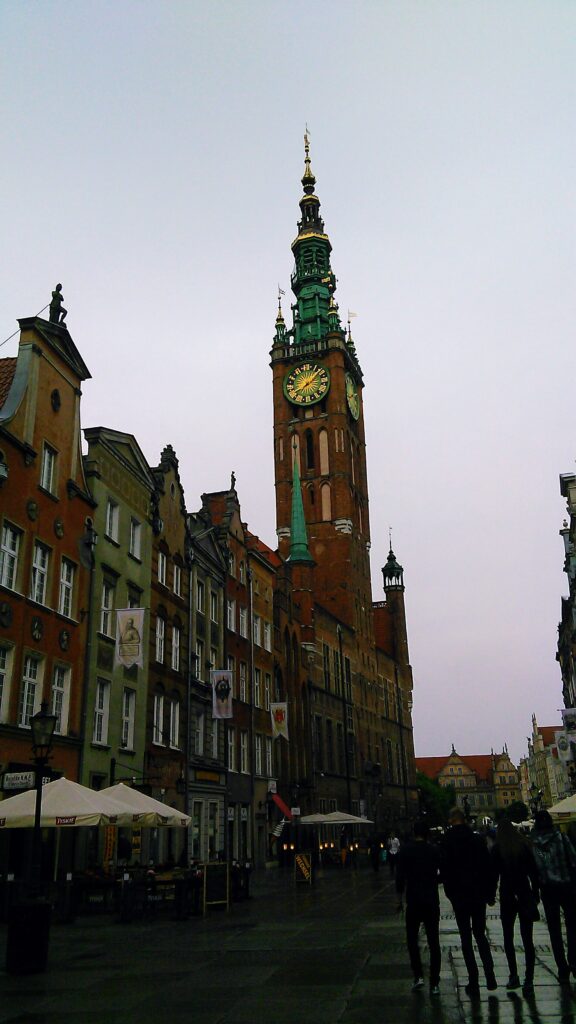
Along the way you’ll pass the Neptune Fountain (the city’s unofficial mascot since 1633), Artus Court (a Gothic merchant house now open as a museum), and the Main Town Hall with its 80-metre tower you can climb for 20 PLN (~$5.50 / €5 / £4). The whole walk takes about 20 minutes if you don’t stop, but you will stop. The facades on Długi Targ are some of the most photographed in Poland, with narrow Dutch-style townhouses rebuilt after their near-total destruction in 1945.
Do this walk first thing in the morning if you’re visiting between June and August. By midday the street fills with tour groups and cruise ship passengers, and by late afternoon it empties out nicely again.
2. Visit the Museum of the Second World War
This is the single best museum I’ve been to in Poland, and possibly in Europe. It opened in 2017 and tells the story of WWII not just from the military side but through the experiences of civilians across dozens of countries. The exhibition spans 5,000 square metres underground. You’ll need at least three hours, probably more.
The museum has a particular weight here because WWII literally started in Gdańsk. On 1 September 1939, German forces attacked the Polish military post at Westerplatte, just a few kilometres from where the museum now stands. The exhibition doesn’t shy away from showing the scale of suffering on all sides, and the section on the siege of Leningrad and the bombing of Warsaw had me standing still for a long time.
Tickets cost 32 PLN (~$9 / €7.50 / £6.50) for adults, with reduced tickets at 24 PLN. On Tuesdays, admission is free, but there’s a daily cap of 2,500 visitors, so arrive early. Audio guides are 12 PLN and available in English. The museum is a 15-minute walk from the centre of Old Town, across the Motława River.
3. Climb St. Mary’s Church tower
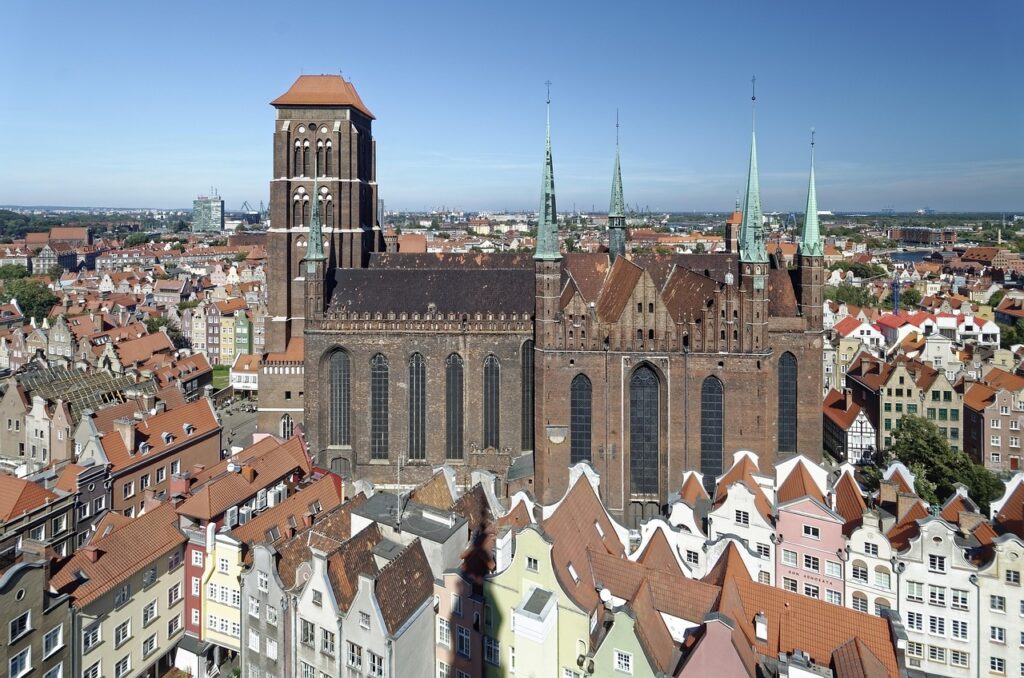
Bazylika Mariacka is the largest brick church in the world. That’s not marketing copy; it really is. Construction started in 1343 and took 159 years to finish. The interior can hold 25,000 people, which came in handy during martial law in the 1980s when Solidarity members hid here.
The real draw for most visitors is the tower climb: 405 steep steps to a platform 78 metres above the city. The first 150 steps are a tight spiral staircase that goes one direction only, so if you have claustrophobia issues, think carefully before starting. After that it opens up and gets easier. The views from the top cover the entire Old Town, the shipyards, and on clear days you can see Sopot and the Bay of Gdańsk.
Entering the church itself is free between December and March. From April to November, it’s 4 PLN for the church and 8 PLN (~$2 / €2 / £1.60) for the church plus tower access. Get there before 10 am in summer, because the platform at the top is tiny and gets crowded fast. Don’t miss the astronomical clock from 1464 inside the northern transept.
4. Explore the European Solidarity Centre
If the WWII museum shows you how Poland was broken, the European Solidarity Centre (Europejskie Centrum Solidarności, or ECS) shows you how it rebuilt itself. This is the museum dedicated to the Solidarity trade union movement that started here at the Gdańsk Shipyard in 1980, eventually leading to the fall of communism across Eastern Europe.
The permanent exhibition walks you through seven halls covering life under communist rule, the 1970 and 1980 strikes, martial law, and the first free elections in 1989. It’s interactive and well-designed, with an English audio guide included in the ticket price. You can finish in about two hours, though there’s enough to hold you for three. The building itself is worth a look from outside: the rust-coloured facade is designed to resemble a ship’s hull, which makes sense once you realise it sits right at the entrance to the historic shipyard.
Tickets are 35 PLN (~$9.50 / €8 / £7) for a standard adult, 30 PLN reduced. The building and temporary exhibits are free to enter; you only pay for the permanent exhibition. Closed on Tuesdays from October to April. The rooftop terrace has a view over the shipyard cranes that’s worth the extra five minutes.
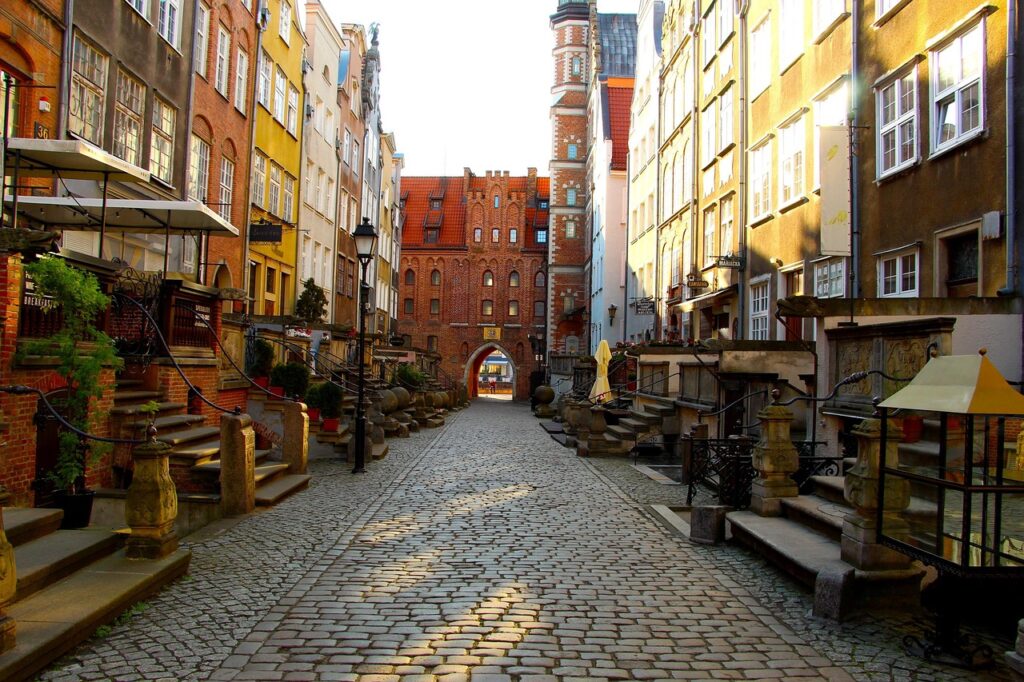
5. Walk down ulica Mariacka (St. Mary’s Street)
This is probably the most photographed street in Gdańsk, and it earns it. Ulica Mariacka (mah-RYATS-kah) runs from St. Mary’s Church down to the Motława River, lined with Gothic townhouses that have ornate stone porches called „przedproża.” Each one is different, and most now house amber jewellery shops and small cafés.
Yes, the Amber shopping here can be aggressive. And yes, a lot of it is overpriced compared to what you’d pay at the Amber Museum shop or at markets outside the Old Town. But the architecture is the real reason to come. Walk it in the early morning or after 6 pm when the tour groups thin out. If you want to buy amber, compare prices at a few shops before committing, and make sure you’re getting Baltic amber, not synthetic resin.
6. See the Gdańsk Crane (Żuraw)
The Żuraw (ZHOO-rahv) is a medieval port crane that dates back to the 15th century, and it’s one of Gdańsk’s most recognisable landmarks. It sits right on the Motława River, and for several centuries it was used to load cargo onto ships and install masts. It’s one of the largest surviving medieval cranes in Europe.
These days the crane houses a branch of the National Maritime Museum. Inside you can see the original treadwheel mechanism (powered by people walking inside it, like a giant hamster wheel). The full Maritime Museum experience includes crossing the river to the main building on Ołowianka island, where there’s a larger exhibition on maritime history and the museum ship Sołdek. A combined ticket for all branches runs about 30 PLN (~$8 / €7 / £6).
7. Visit the Amber Museum at the Great Mill
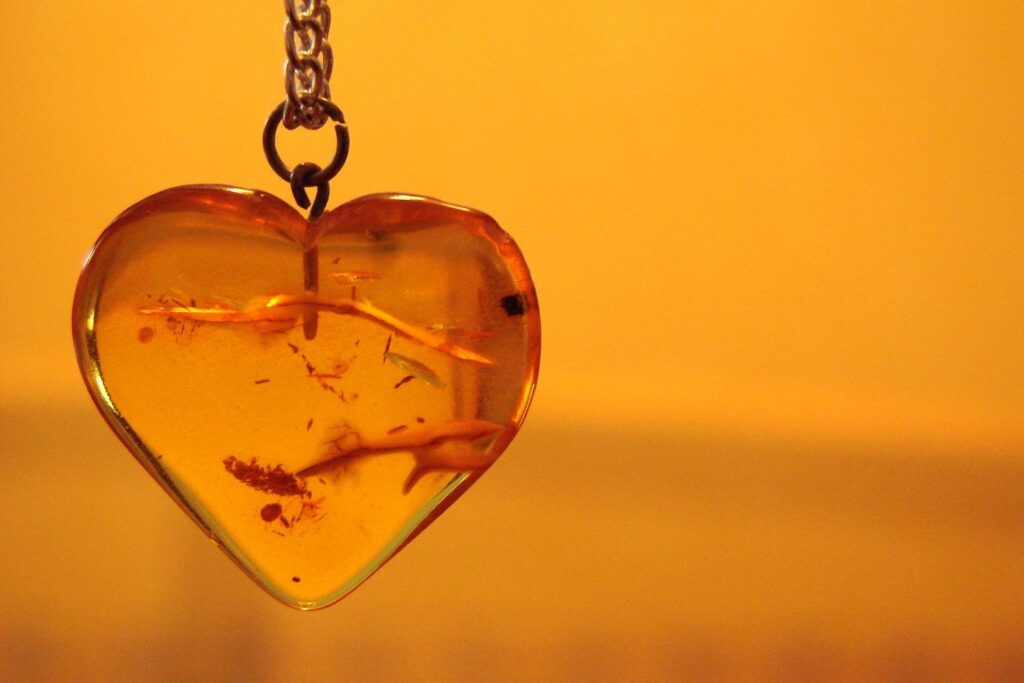
Gdańsk has been the centre of the European amber trade for centuries, and the Amber Museum (Muzeum Bursztynu) does a solid job of explaining why. It moved in 2021 to the Wielki Młyn (Great Mill), a massive 14th-century brick building that was once one of the largest industrial facilities in medieval Europe. The museum covers how amber forms, how it was traded along the ancient Amber Road, and how artisans work with it today.
The standout exhibit is the „Gierłowska Lizard,” a lump of amber containing a mummified lizard from roughly 40 million years ago. There’s also a section on fake amber and how to spot it, which is useful before you hit the shops on Mariacka. Admission is about 25 PLN (~$7 / €6 / £5), and Mondays are free, though expect bigger crowds on those days. Budget about 90 minutes.
8. Take a boat trip on the Motława
Several operators run boat tours from the Długie Pobrzeże wharf near the Green Gate. The most popular routes take you down the Motława through the old port, past the Żuraw crane and Ołowianka island, and some go all the way out to Westerplatte (about 30 minutes each way). You can also find replica galleon ships that do shorter harbour loops.
The Westerplatte boat trip is the most useful if you want to combine two things to do in Gdańsk in one outing, since getting there by bus is slower and less interesting. Tickets run 50–80 PLN (~$14–22 / €12–19 / £10–16) return for the Westerplatte trip, depending on the operator and the boat. Shorter harbour cruises start around 30 PLN. Summer evenings are best, when the light on the old warehouses along the river is particularly good.
[ALT: Tourist boat cruising the Motława River past the colourful waterfront buildings of Gdańsk]
9. Spend an evening at 100cznia in the shipyard
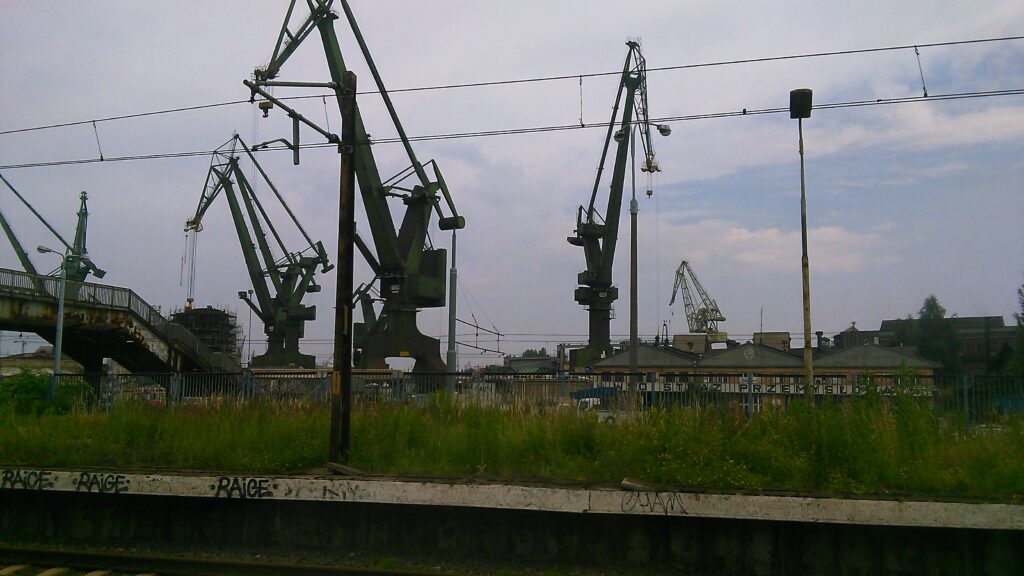
If you want to see what to do in Gdańsk beyond the Old Town, head to the old shipyard grounds. 100cznia (stohtch-NYAH) is a cultural space built from stacked shipping containers on the site of the former Gdańsk Shipyard. It’s part food court, part bar, part art gallery, part hangout spot, and it has the kind of relaxed, slightly chaotic energy that you don’t find in the tourist centre.
There are around nine or ten street food vendors serving everything from Indian curries to tacos to traditional Polish food, all for 20–35 PLN (~$5.50–10 / €5–8 / £4–7) per dish. The bar does craft beer and natural wine. In summer the outdoor areas expand with deck chairs, a skate ramp, and live music events. In winter, the heated indoor halls keep it going year-round. Free entry. It’s a 10-minute walk from the European Solidarity Centre, in the same shipyard area.
The neighbouring Elektryków Street has more of the same vibe, with bars and creative spaces in old shipyard buildings. This whole area is the closest Gdańsk has to a Berlin-style post-industrial nightlife district, and it’s still evolving.
10. Visit Westerplatte
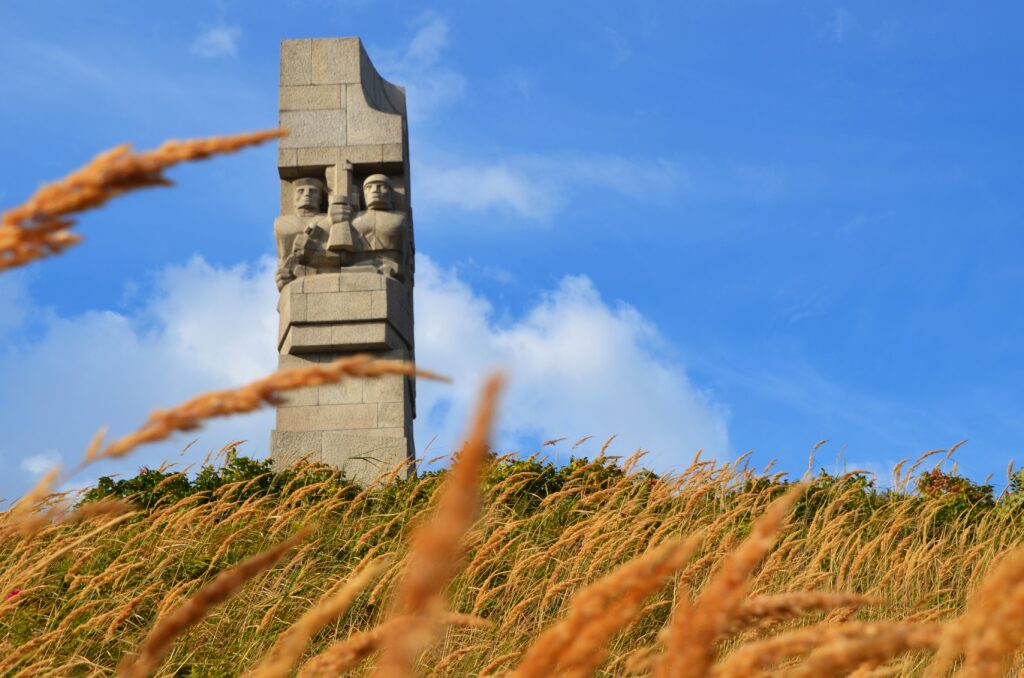
Westerplatte is the peninsula where WWII began in Europe. On 1 September 1939, the German battleship Schleswig-Holstein opened fire on the Polish military garrison stationed here. The 182 Polish defenders held out for seven days against over 3,500 German troops, and the site became a symbol of Polish resistance.
Today you can see the ruins of the barracks and guardhouses, plus a large monument erected in 1966. The Museum of the Second World War has been developing a new Westerplatte Museum branch, with a visitor centre expected to expand the experience. You can get there by boat from the Old Town wharf (the more interesting option), by bus 106 from outside the main train station, or by car. Budget about two hours for the round trip including time on site.
11. Listen to the organ at Oliwa Cathedral
This one is about a 20-minute tram ride from the centre, in the Oliwa district (take tram 6 or 12). The cathedral itself is a mix of Gothic, Baroque, and Rococo, but the reason people come is the 18th-century organ. It has 7,896 pipes and a mechanical system that makes wooden angels move their trumpets and stars spin during performances. It sounds strange on paper, but it’s genuinely impressive in person.
Free organ concerts happen throughout the summer, typically at 10:00, 11:00, 12:00, and 13:00, lasting about 20 minutes each. The surrounding Oliwa Park is a nice place to walk afterwards, with an old botanical garden and tree-lined paths. This is one of those unusual things to do in Gdańsk that most tourists skip, partly because it’s outside the Old Town, and partly because nobody expects a church organ to be one of the highlights of a trip.
12. Eat Baltic fish (this is a port city, act like it)
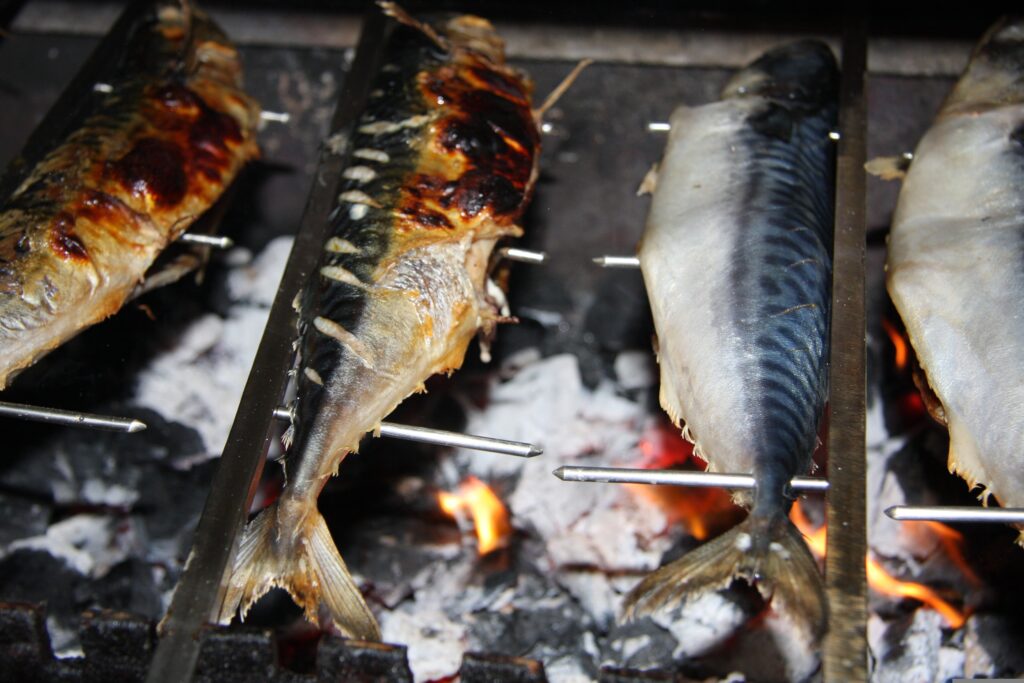
Most travel guides will tell you to eat pierogi in Gdańsk. Sure, do that. But Gdańsk is on the Baltic Sea, and what you should really be eating here is fish. Smoked flądra (flounder), fried dorsz (cod), śledź (herring) in cream sauce, and if you’re lucky, fresh węgorz (eel) from the Vistula Lagoon. This is the food people actually eat here, and it’s what the city does better than anywhere inland.
Fishmarkt near the Motława waterfront does good herring and smoked fish dishes for 30–50 PLN (~$8–14 / €7–12 / £6–10). For something more casual, look for a smażalnia ryb (fried fish stand) near the waterfront or in Sopot. You’ll get a piece of fried cod with chips and sałatka for about 25 PLN. Not fancy, not trying to be. In Jelitkowo or Brzeźno, closer to the beach, there are seasonal fish shacks that locals prefer over anything in the Old Town.
For traditional Polish food beyond fish, try the milk bars (bar mleczny). These are subsidised cafeteria-style restaurants left over from the communist era, and you can get a full meal, pierogi included, for under 20 PLN (~$5.50 / €4.70 / £4). Portions are honest, the menus are on the wall in Polish (point and smile), and nobody’s trying to upsell you. Bar Mleczny Neptun on Długa is a solid option near the Royal Way.
13. Explore Gdańsk’s craft beer scene
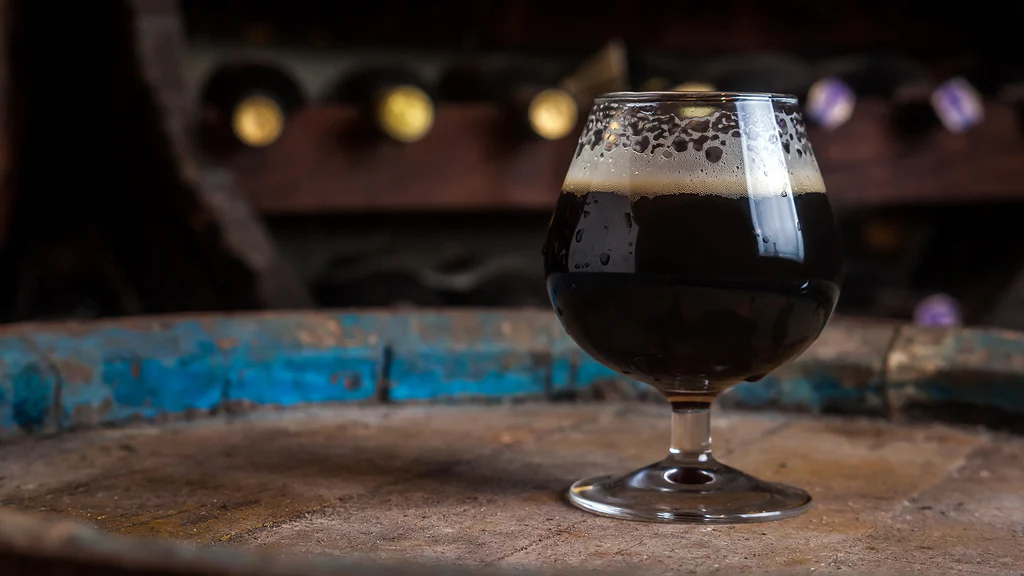
Poland’s craft beer scene has exploded over the last decade, and Gdańsk has its share. Piwna 47, in an old cellar on ulica Piwna (literally „Beer Street”), has a good rotating tap list of Polish craft beers. Browar PG4T on Stągiewna serves its own brews in a space that used to be a 17th-century granary. A pint usually costs 14–22 PLN (~$4–6 / €3–5 / £3–4.50), which is roughly a third of what you’d pay in London for the same quality.
If you’re into the topic, the Old Town has enough beer bars to fill an evening without repeating. Just don’t expect the IPA obsession you might find in the UK or US. Polish craft breweries tend to do a wider range of styles, including excellent Baltic porters and smoked beers.
Things to see in Gdańsk: day trips worth the train ride
14. Sopot and the longest wooden pier in Europe
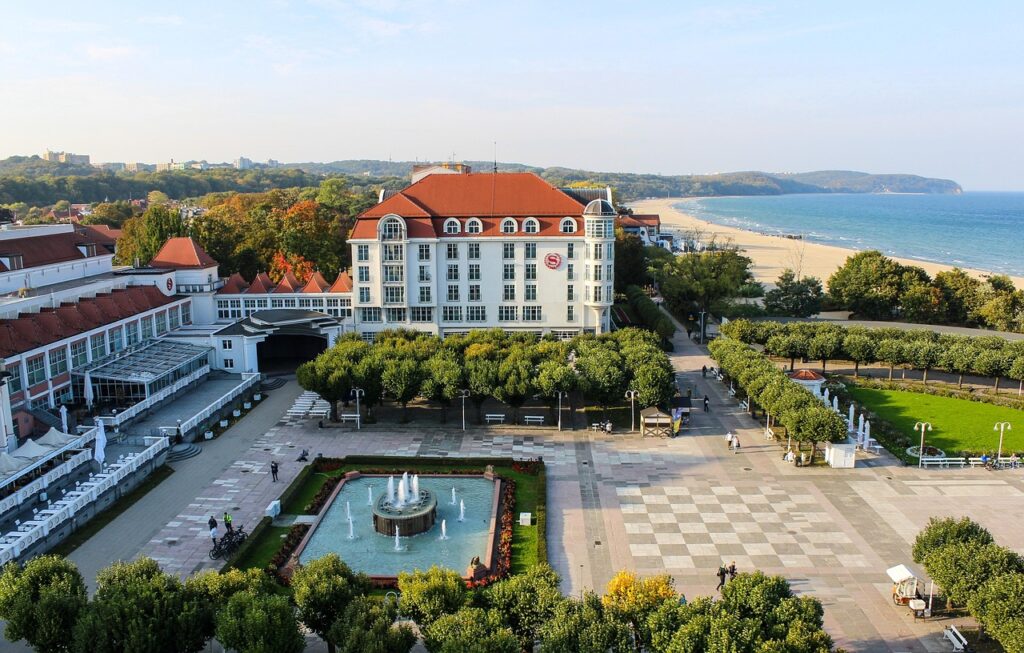
Sopot (SOH-pot) is a seaside resort town 15 minutes north of Gdańsk by the SKM commuter train. The ticket costs about 5.50 PLN (~$1.50 / €1.30 / £1.10), and trains run every 10–15 minutes. The main attraction is the Molo, a 511-metre wooden pier extending into the Bay of Gdańsk. Walking the pier costs 10 PLN in summer (free in winter). The beach is wide and sandy, and Monte Cassino Street, the main pedestrian boulevard, is lined with restaurants and bars.
Sopot works well as a half-day trip. Go in the morning, walk the pier, have lunch, and be back in Gdańsk for the afternoon. In summer it gets packed, especially on weekends. If you prefer a quieter beach day, Jelitkowo (between Gdańsk and Sopot) is easier to deal with.
15. Malbork Castle, the largest brick castle in the world
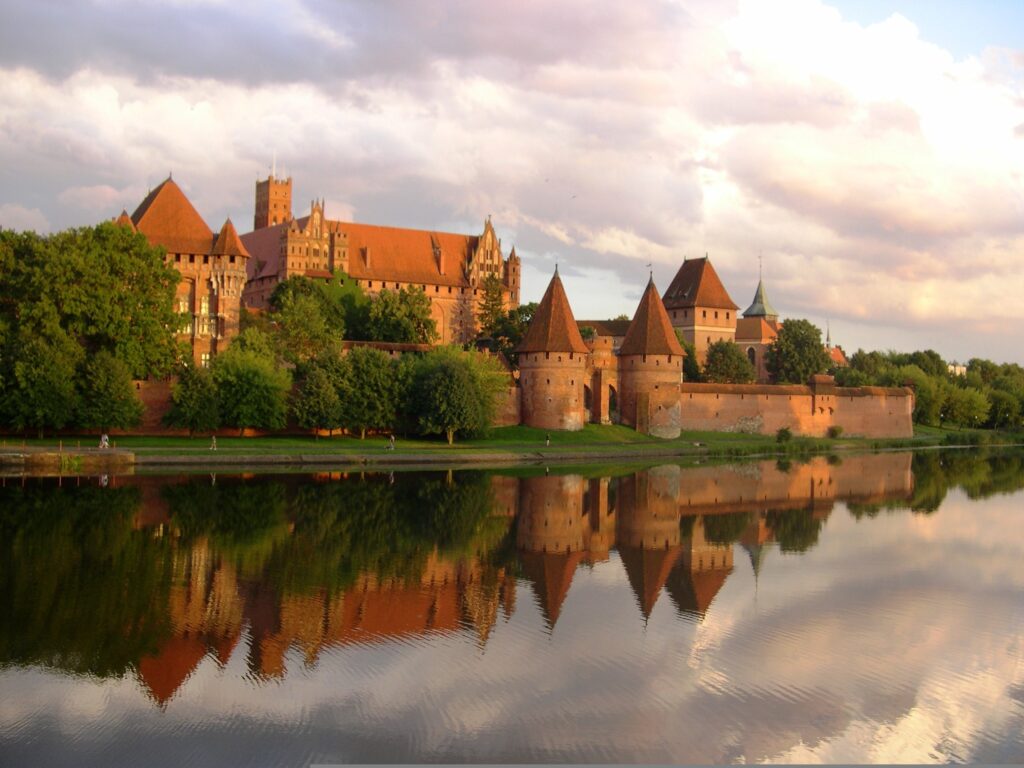
Malbork (MAL-bork) is about 50 minutes south of Gdańsk by train, and tickets cost around 20–30 PLN (~$5.50–8 / €5–7 / £4–6) depending on the service. The castle was built by the Teutonic Knights in the 13th century and it’s enormous. The full UNESCO World Heritage site includes three separately walled sections, a moat, and a collection of medieval armour and amber that could fill an entire day if you let it.
Admission to Malbork Castle is about 55 PLN (~$15 / €13 / £11) for adults with an audio guide. Guided tours in English are available but less frequent, so check the castle’s website in advance. Budget at least four hours for the castle itself and another two for travel. You can make it a day trip from Gdańsk pretty comfortably, though it’s a full day.
FAQ
Absolutely. Gdańsk has world-class museums, one of the most well-preserved (and rebuilt) Old Towns in Europe, excellent food at prices that won’t bankrupt you, and a coastal location that gives it a completely different feel from Kraków or Warsaw. If you’re choosing between Gdańsk and a second visit to Prague or Budapest, I’d pick Gdańsk.
The Museum of the Second World War and the European Solidarity Centre are the two must-sees. After that, climb St. Mary’s Church tower for the views, walk the Royal Way and ulica Mariacka, and spend an evening at 100cznia in the shipyard district. If you have an extra day, Malbork Castle is the best day trip in northern Poland.
Two full days covers the Old Town, the two major museums, and one day trip (Sopot or Westerplatte). Three days is better if you want to add Malbork Castle, the Oliwa Cathedral organ concerts, and have time to just sit by the Motława without rushing. You won’t run out of things to do in Gdańsk in three days, but two is workable.
Historically, three things: amber (it’s been the centre of the Baltic amber trade for centuries), the start of WWII (the German attack on Westerplatte on 1 September 1939), and the Solidarity movement (the shipyard strikes in 1980 that eventually brought down communism in Poland). Today, it’s also known for its rebuilt Gothic Old Town, its maritime heritage, and increasingly for its food and nightlife scene.